
Open source projects
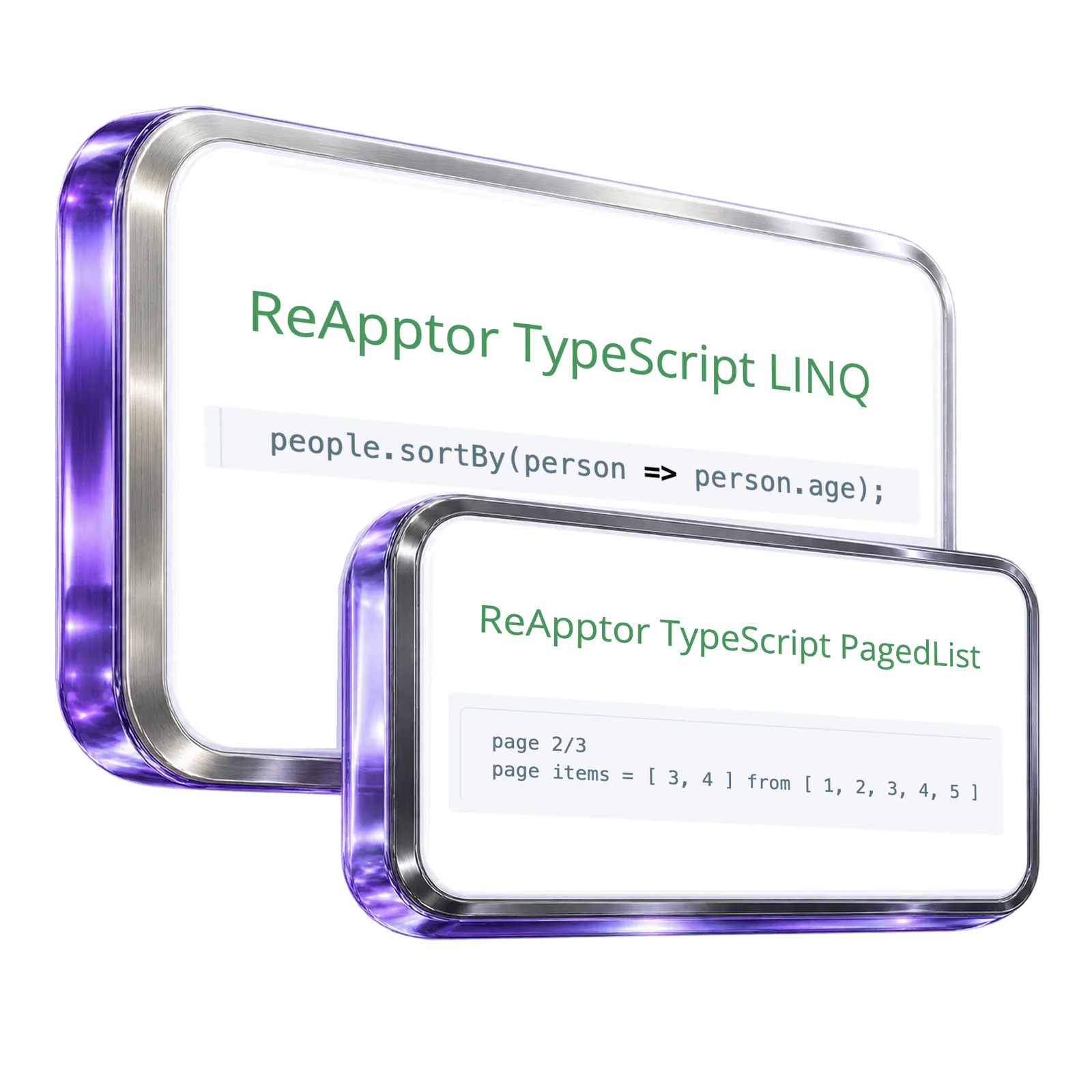
We publish selected parts of the ReApptor platform as open source to make code more transparent, simple, reusable and reliable. The libraries are free under the MIT license and available on GitHub and npm. ReApptor TypeScript LINQ brings C#-style LINQ queries to TypeScript, and ReApptor TypeScript PagedList splits collections into pages. Both libraries are fully tested.
- Published libraries Released developer libraries used as building blocks in ReApptor applications.
Case overview
Business problem
Small libraries for recurring data work
Business software repeatedly works with lists of orders, products and other records. Developers need to filter, sort and group those lists, then divide the results into pages that people can browse. ReApptor publishes two focused TypeScript libraries for these recurring tasks.
Their source code, documentation and examples are public. A development team can inspect how they work and choose where they fit its own application, instead of treating a reusable dependency as a closed box.
Inspect, install and reuse
ReApptor TypeScript LINQ brings familiar C#-style collection operations to TypeScript, including filtering, ordering, grouping and aggregation. ReApptor TypeScript PagedList selects a page from a collection and provides the information needed to navigate it: page number, page count, total item count and whether another page exists.
Both packages are available on npm under the MIT license, with documentation and tests in their GitHub repositories. They can be used independently of the wider ReApptor platform. The published examples show how to install the packages and use their array extensions in an existing TypeScript project.
Screenshots and media
Screenshots and media
Product capabilities
What customers and teams can do
Find the records that matter
For example, an order view can select open orders, sort them by delivery date and group them by customer. LINQ supplies the collection operations for that sequence. The developer writes the business rule in TypeScript and can follow each step in the code. The same operations can also prepare product lists or calculate totals from the selected records.
Make long lists manageable
After selecting and sorting a collection, PagedList can return the requested page and its navigation information. A catalogue can show a limited set of products alongside the total number of results and whether a next page exists. The library handles the collection and page metadata; the application decides how the page controls look and how the underlying records are loaded.
Useful links
Source code and examples
Explore the two libraries, read the documentation and see how to use them in your TypeScript project.
Need a similar platform?
ReApptor builds reusable SaaS platforms for business-critical workflows.
Get in touch